
Columbia’s withdrawal left Windham High School more segregated
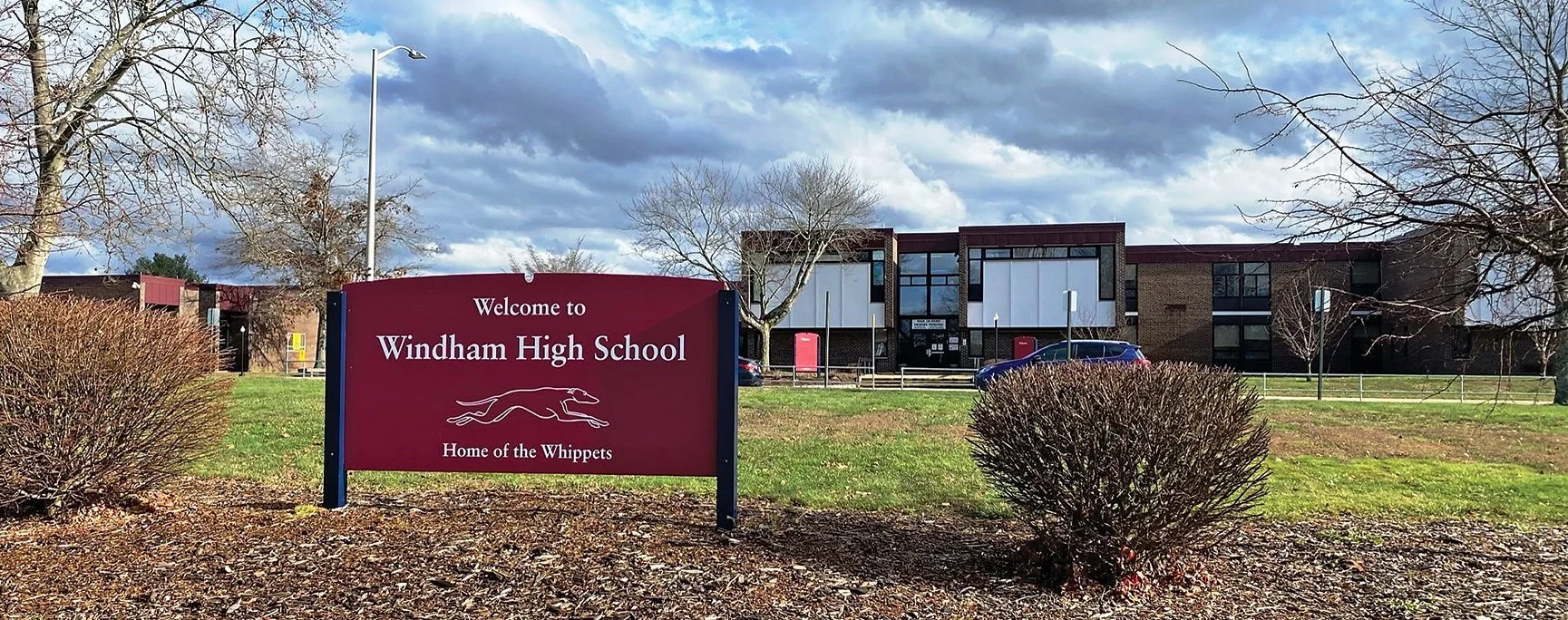
Credit: Windham Public Schools
A recent analysis by Brown’s Promise and the Segregation Tracking Project found Connecticut to have among the highest racially segregated school system between districts in the country, illustrating a stark contrast within one of the wealthiest states in the nation.

Tyler Kania
The news was particularly unsettling for me, as I have seen a move toward segregation in my community.
I grew up in Columbia, a small, predominantly white, upper-middle-class town, but I graduated in 2010 from Windham High School in Willimantic, where 82% of students are now Hispanic and 88% are minorities, up 17 percentage points from when I graduated.
Connecticut ranks third in the country in poverty-packing, and at Windham High School, 75% of students are economically disadvantaged. Since 57% of public-school funding in Connecticut comes from property taxes, residents in Willimantic, where household incomes are relatively low, carry a proportionately larger tax burden than residents in affluent towns like Wilton.
Windham also receives Education Cost Sharing (ECS) grants from the state, based on factors such as the number of English Language Learners, special education students, and economically disadvantaged students. But, unfortunately, longtime Windham Board of Education member Mark Doyle told me, “Windham has never received the fully-funded level required by law.”
Doyle said that for decades, Windham High School benefited from “lower-cost students” from Columbia, who made per-classroom operational costs more economical. But in 2012, after several failed attempts, the Columbia Board of Education decided to remove Windham from the school placement options available to graduating eigth-grade students, sending them instead to schools with similar demographics, such as E.O. Smith in Mansfield and Bolton High.
While there is no available data that shows a discernible difference in the educational outcomes of Columbia students since this decision was made, the college enrollment rate among Windham graduates has declined from 53.9% in 2010 to 37.9% in 2024, which can only partially be explained by the 9-10% of students who were previously from Columbia.
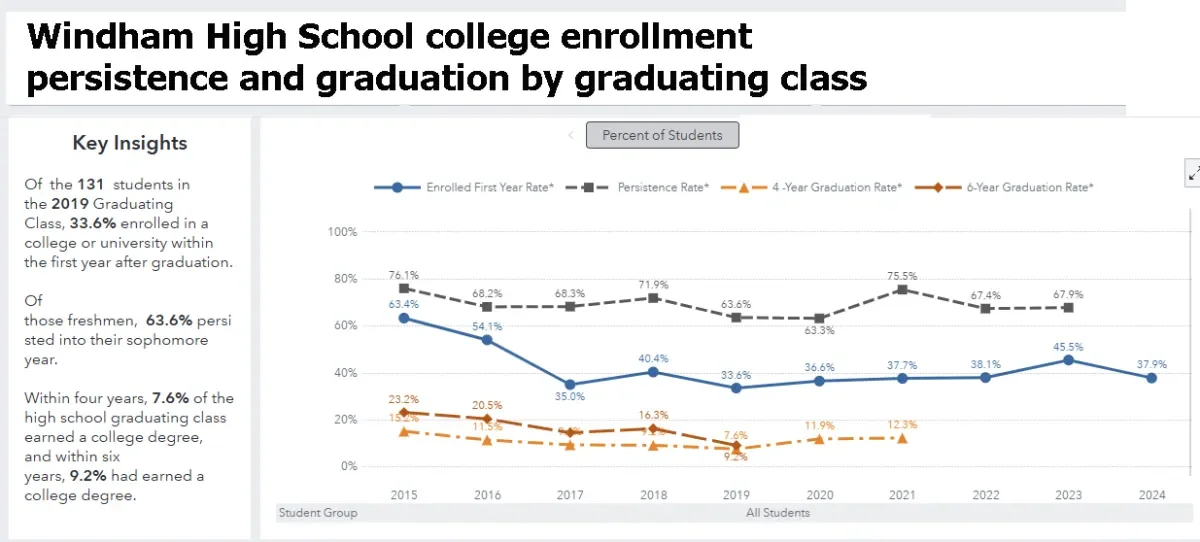
Credit: public-edsight.ct.gov
This makes sense, as many studies, including one by the Century Foundation, suggest that students in integrated schools are more likely to enroll in college. A Hispanic friend of mine from Willimantic told me that he had never considered college before he became friends with college-bound Columbia students. Today, he is a doctor at an Ivy League medical center.
On poverty-packing, Doyle said, “There are very few multi-family homes in neighboring towns, nor are there homeless shelters or soup kitchens nearby, so those in need have no other choice but to live in Willimantic.”
There are 169 school districts in Connecticut, and Doyle believes that to address the segregation issue, many of the smaller districts would need to merge on a regional basis: “Columbia, Lebanon, Andover, Bolton, that’s a lot of administrative costs that could be curtailed by combining districts.”
Windham High School played an instrumental role in my career success in cybersecurity, coaching, and as a National Book of the Year Finalist. The school’s diversity increased my understanding of the world, and it is disheartening that Columbia’s Board of Education opted to send its students elsewhere based on what Doyle called “optics.”
Tyler Kania lives in Columbia.