
Homelessness is a housing affordability problem
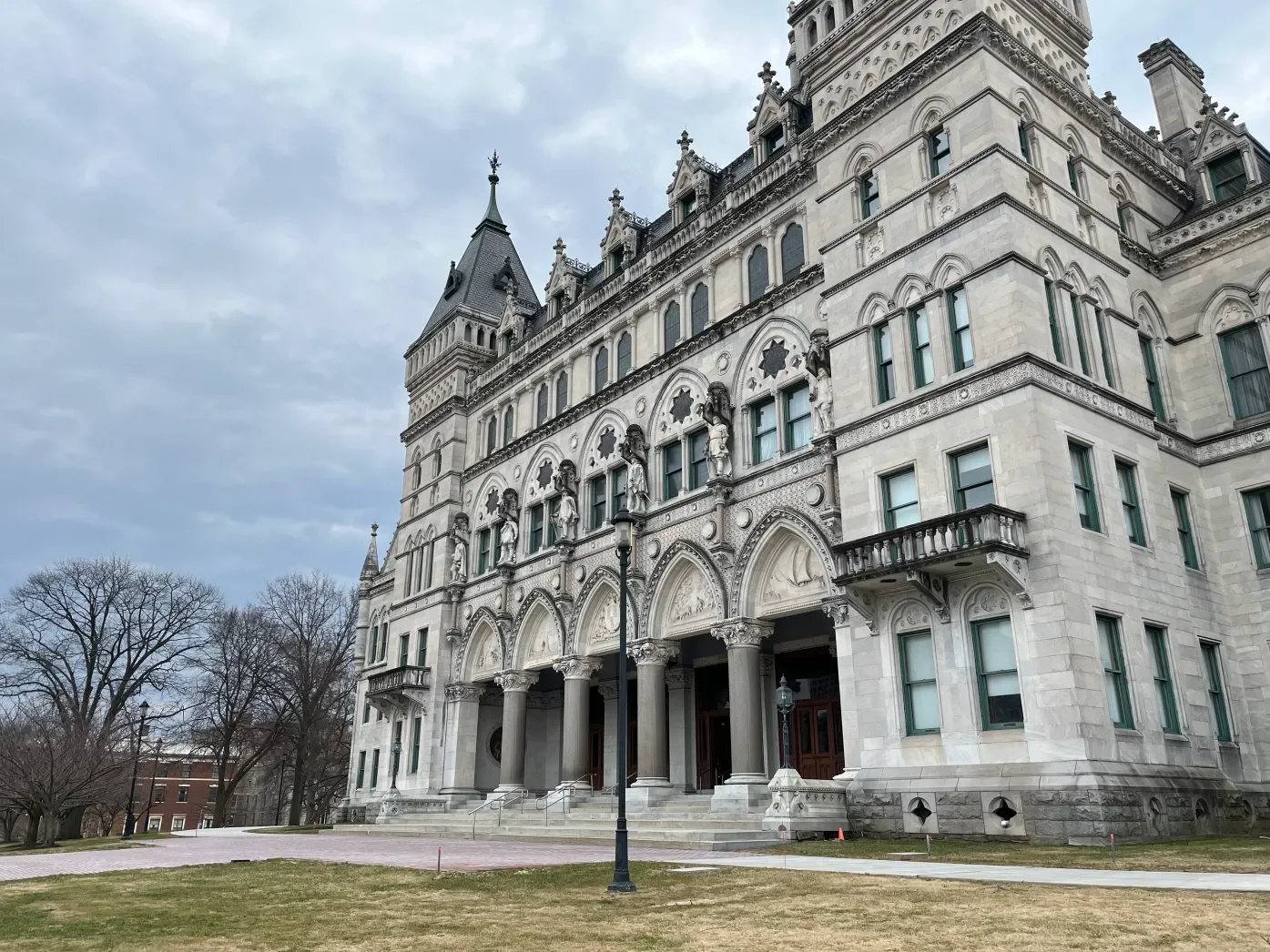
Connecticut State Capitol Building (Hartford Courant)
In December 2025, President Trump called affordability a “hoax” – rhetoric that might explain his policy towards homelessness: criminalize it, frame it as a mental illness and addiction problem, and denounce Housing First, the permanent housing placement method that has been empirically proven to work for decades.
Affordability is no hoax. The $7.25 federal minimum wage has not increased since 2009, despite the BLS (Bureau of Labor Statistics) shelter index showing a 38% increase in shelter costs over the past five years; grocery prices are up over 30% since 2019, and just in the past year, gas prices have skyrocketed 30% while SNAP and MEDICAID benefits have undergone massive cuts, widening the burden on low-income families.
High inflation across the country is worsened by a shortage of 7.2 million low-income homes, according to the National Low Income Housing Coalition. After all, homelessness is a housing affordability problem more than anything.
I talked to Arthur Palmer, the author of “Humor, Humility, and Homelessness,” and a 21-year volunteer at a homeless shelter in New Milford, Connecticut, who agreed: “The cost of living is too high. We get more and more people every year.”
A 2023 cross-state statistical study published in Cureus corroborates this, finding that the cost-of-living index was the single largest contributor to homelessness, at 61.4%. The same study found that states with higher opioid prescription rates actually had lower homelessness.
Mr. Palmer may have expertise that the Trump administration is missing by adopting the playbook of Joe Lonsdale, the billionaire co-founder of Palantir, on homelessness policy.
Lonsdale’s right-leaning policy think tank, The Cicero Institute, is often cited by the US Department of Housing and Urban Development (HUD), which hopes to cap permanent housing spending at 30% from its prior level of 87%, shifting the money towards forced mental illness and substance abuse treatment instead. The National Low Income Housing Coalition believes this could send 170,000 people into homelessness. On the state level, the Cicero Institute has played a role in 16 states moving to criminalize sleeping outdoors (New York Times).
One contradiction to this one-size-fits-all policy (besides the 1.5 million homeless children) is Hawaii, which has the highest rate of homelessness in the country(Visual Capitalist), yet the second best overall mental health (according to the 2025 Mental Health in America report, which combines measures for substance abuse with mental illness).
“We already have the solution,” Palmer told me. “Housing First. Everyone deserves a lock on their door. Many homeless women are victims of domestic violence. They deserve safety.” He pointed out that between 2008 and 2022, Finland had achieved a 68% reduction in homelessness through Housing First.
Housing First was first federally adopted in the United States by the George W. Bush administration’s “10-Year Plan to End Homelessness”, which resulted in a 28% decline in homelessness in its first two years. Placing people in permanent housing has also been widely proven to reduce crime and hospital visits, ultimately easing the burden on taxpayers.
Before I hung up with Mr. Palmer, he reminded me that the media is complicit in these new policies: “It’s always bad news when the homeless are on TV, but I have seen tremendous acts of kindness from these people. I see them give strangers their coats or their food all the time, and sometimes that’s all they have. These are my people.”
He’s right – but they’re our people too, American people, and we cannot criminalize poverty just to make the sidewalks nicer.
Tyler Kania is a 2025 IAN Book of the Year Finalist and independent journalist from Columbia, Conn.